



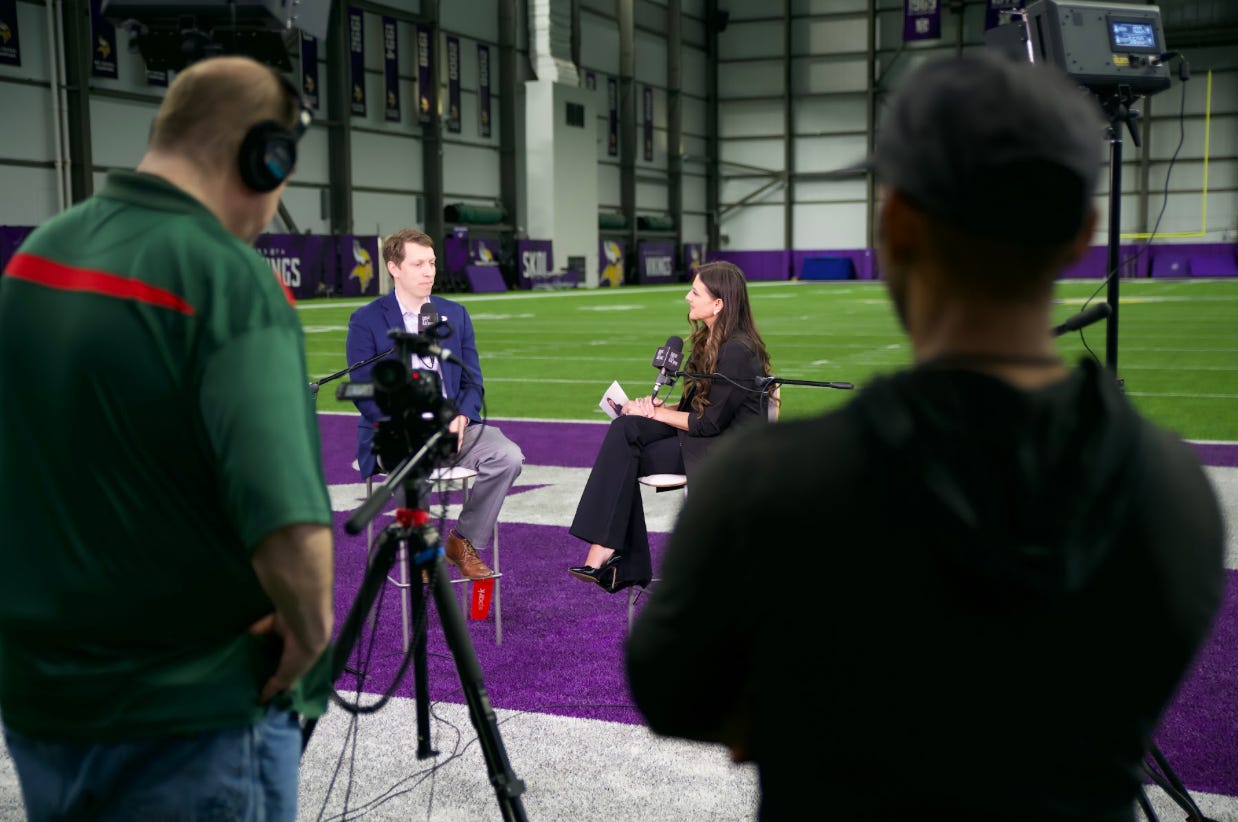
There is something strange about walking into the Minnesota Vikings’ TCO Performance Center on an ordinary weekday. The fields are immaculate, players move through the building, and everywhere there are reminders that this is an organization built around one very public objective: winning football games.
But sitting across from Brett Taber, the Vikings’ Vice President of Social Impact, I found myself thinking about something else entirely.
What do we owe the world when we have the power to influence it?
Brett has spent nearly two decades with the Vikings, although his career began in perhaps the least predictable way possible: inside a mascot costume. He is shy by nature, he told me, and becoming a character gave him permission to step outside himself. As a mascot, he could walk into a hospital room and make a sick child smile. He could show up at a football field or neighborhood park and watch people change simply because something they loved had suddenly entered the room.
Long before he had the title or the responsibility he carries today, he was learning something about influence: people give you their attention, and then you have to decide what to do with it.
That idea became the thread running through our entire conversation.
Sports may be one of the few places left where people who disagree about almost everything can still stand shoulder to shoulder and want exactly the same thing. I told Brett about watching Bosnia and Herzegovina qualify for the World Cup and seeing people flood the streets in celebration. I grew up in a country marked by war and genocide, so I understand something about the power of a shared identity after people have experienced division. For a few hours, nobody was asking who you voted for or what you believed. We were simply Bosnians.
Brett called sports “the last great unifier.”
Perhaps that is why the work happening behind the Vikings brand matters more than many people realize. A football team has access to something corporations spend billions trying to manufacture: genuine emotional connection. Children know the logo. Families inherit loyalty across generations. Players become heroes to people they may never meet. When that kind of influence is used intentionally, it can reach places money alone cannot.
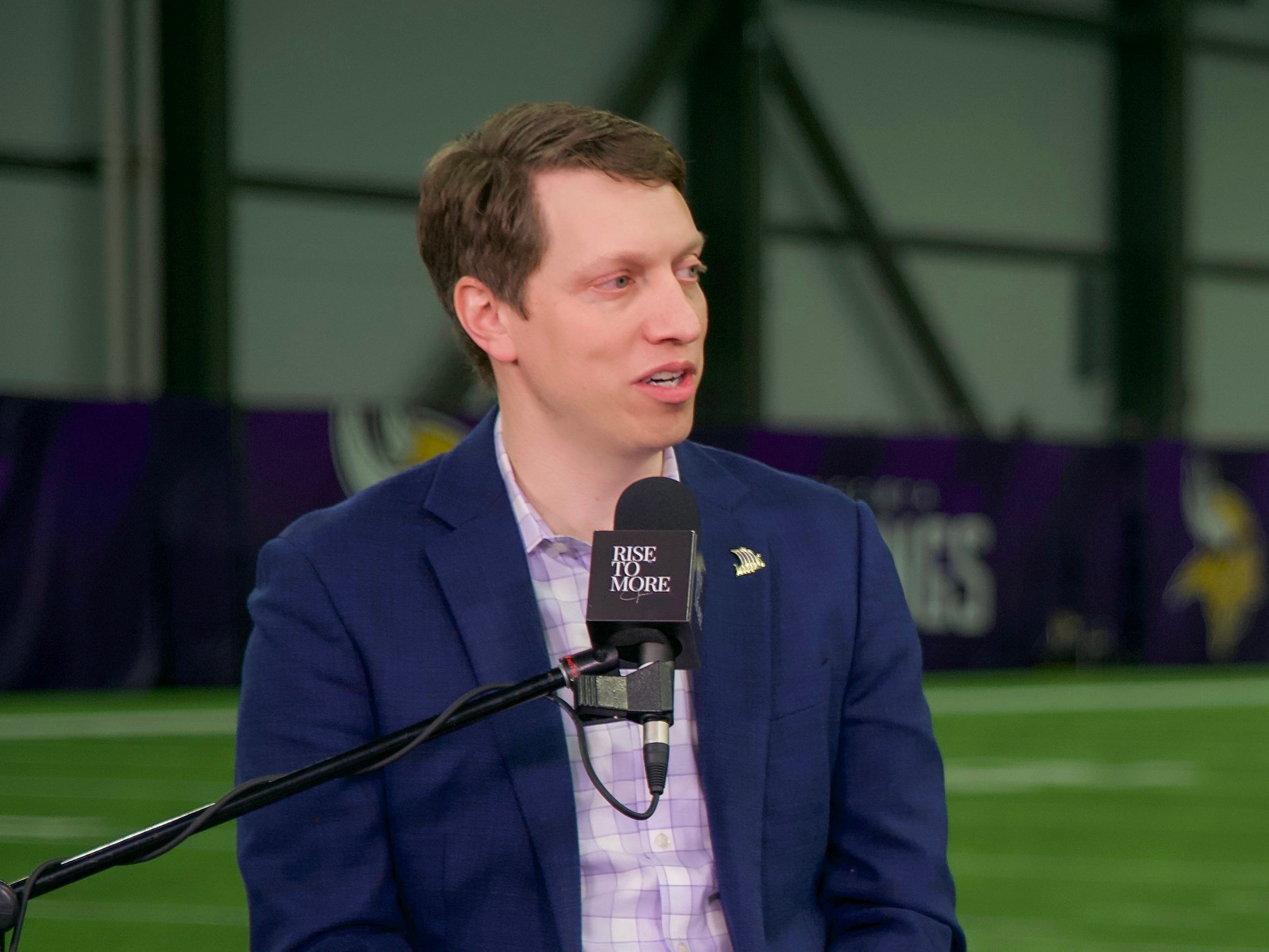
What impressed me about Brett was how little interest he has in the performance of doing good. In fact, he told me he dislikes the phrase “corporate social responsibility” because it makes service sound like an obligation—a box a successful company is expected to check. His question is much more interesting: if a community has embraced you, why wouldn’t you want to care for it in return?
That difference between appearing useful and actually being useful shapes how his team approaches its work. The Vikings aren’t simply asking how many meals they distributed or how much media attention an initiative received. Brett wants to know whether anything changed. Are graduation rates improving? Are young people healthier? Is access expanding? If the outcome stays the same, a beautiful campaign and a lot of headlines don’t mean much.
One of the clearest examples is girls flag football. What could easily be dismissed as another sports initiative becomes something very different when you understand who is showing up. Brett explained that girls drop out of sports at twice the rate of boys as they move from middle school into high school, and that roughly half of the girls participating in flag football don’t play another team sport. For some, football is the first place they recognize themselves as athletes.
A few years ago, Minnesota’s program began with four teams. Last year, there were 51. This spring, there are 104 varsity high school teams, along with nine Division II and III college programs in the region. Brett told me about a young woman from Camden High School in North Minneapolis who recently committed to St. Benedict to continue both her education and her flag football career—an opportunity that essentially did not exist a few years ago.
I am a St. Ben’s alumna, so that story landed particularly close to home. But there was another reason it moved me.
I know what it means when somebody opens a door that changes the trajectory of a life.
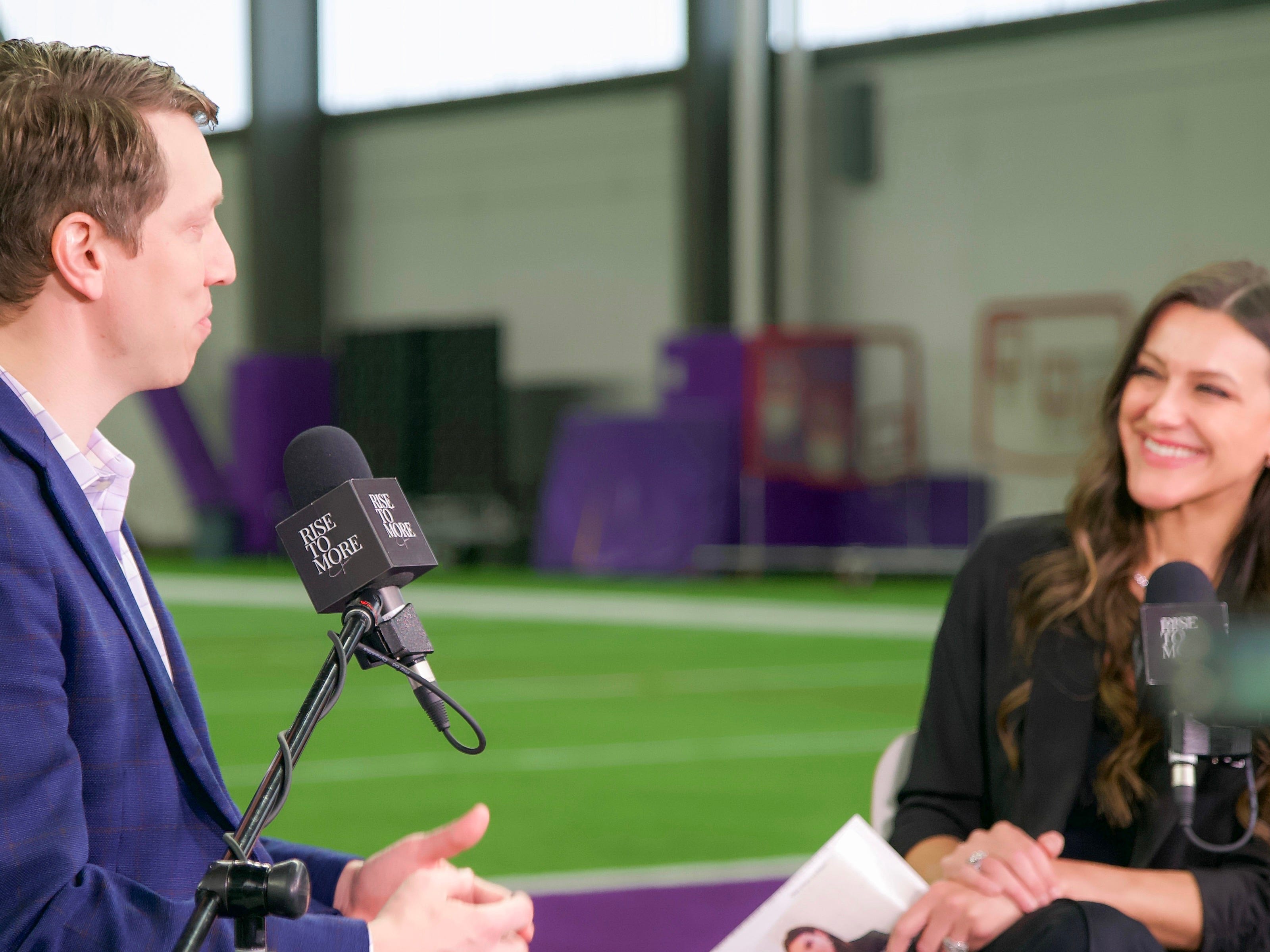
I grew up during the war in Bosnia and lived in a refugee camp. There were people along the way who helped me—not through sports, but through moments of generosity and opportunity that altered what became possible for me. Their kindness did not end with me. I went on to help other people, who will help other people still. This is what we sometimes fail to understand about service: we rarely get to see the full life of what we give.
The same thought came back when Brett spoke about Vikings Table, the food truck launched in 2019 to provide healthy meals throughout the community. In 2025, quarterback J.J. McCarthy delivered its 100,000th meal. But Brett was far less interested in the number than in what a meal can communicate.
He described the Vikings showing up after tragedies, fires and moments when families were afraid or hurting. He spoke about providing meals to students and teachers at Annunciation after tragedy, helping after the Drake Hotel fire, and partnering with organizations such as the Salvation Army and American Red Cross. In those circumstances, food becomes something larger than food. It becomes, in Brett’s words, the community “wrapping your arms around somebody and telling them that you care about them, that you see them, that you’re there for them.”
I understood that viscerally because there were times in my childhood when I was hungry.
It is easy, particularly when we live comfortable lives, to forget how close profound need can be. It may exist a few miles from our homes, inside schools our children pass every day. We can become so accustomed to our own reality that we mistake it for everyone’s.


Brett’s work continually asks him to resist that instinct.
Perhaps the most revealing part of our conversation came when I asked him where this orientation toward service began. He didn’t name an executive, philanthropist or famous leader. He talked about his middle-school American history teacher in rural Iowa.
His name was Bob Jensen.
Bob had been a teacher and baseball coach, then spent decades farming before returning in retirement to the classroom because he still wanted to affect young people’s lives. He taught his students about integrity, defending others, putting people first and believing that communities become better when we accept responsibility for one another.
“We, not me,” Brett remembered.
Decades later, inside one of the most powerful sports organizations in our region, he still asks himself what Bob would do.
I found that extraordinarily moving. We spend so much time thinking leadership is created in boardrooms that we forget how often it begins quietly, years earlier, when someone who has no idea who we will become shows us what kind of person we could be.
Brett said something else I haven’t stopped thinking about: “We all have a Bob in our lives.”
He’s right.
Someone showed us. A teacher, parent, coach, neighbor, grandparent, boss or stranger behaved in a way that quietly established our understanding of goodness. And if we are fortunate, eventually we become that person for someone else.
You can see that philosophy in the way Brett talks about Vikings players, too. He told me about Justin Jefferson spending an afternoon with children facing serious health challenges through Make-A-Wish. What stayed with Brett wasn’t simply that Jefferson participated; it was how little convincing it required. The answer was essentially: tell me when and where, and I’ll be there.
A few hours for one person can become a memory another family carries forever.
Brett has been in professional sports long enough to know that fame does not automatically create generosity. A platform merely amplifies the person using it. That is why he speaks so often about authenticity. Players like Brian O’Neill and Aaron Jones have gravitated toward causes connected to their own lives and families. The organization’s role, as Brett sees it, is not to manufacture concern but to listen closely enough to understand where genuine concern already exists—and then help turn it into action.
It is a distinction I wish more organizations understood.
People can feel the difference between service and performance.
Toward the end of our conversation, I asked Brett about leadership. Many of the people who listen to Rise to More are founders, executives and people carrying enormous responsibility, and I wanted to know what he had learned from trying to move complicated work forward inside an organization this large.
His answer wasn’t about charisma or vision.
It was about people.
Big goals are seductive. We love talking about bold ideas, enormous impact and taking big swings. But Brett said you cannot move toward those goals while sacrificing the people and relationships required to get there. Your team, partners, stakeholders and community are not obstacles between you and the vision. They are how the vision becomes possible.
It sounds obvious until you watch how often ambition makes us forget it.
And perhaps the most interesting thing about Brett’s definition of legacy is that he doesn’t hope all of his programs survive.
He hopes some of them become unnecessary.
He hopes that ten years from now nobody talks about girls flag football as something novel because girls playing football will simply be normal. He hopes his own three-year-old daughter can play at the varsity level without anyone considering it remarkable. And he said he hopes Vikings Table, at least in its current form, doesn’t need to exist forever because the conditions that made it necessary have changed.
“If we have to do these same programs year in, year out for however many years into the future,” he told me, “then that means we didn’t change something fundamental about how we operate as a society and as a community.”
I love that.
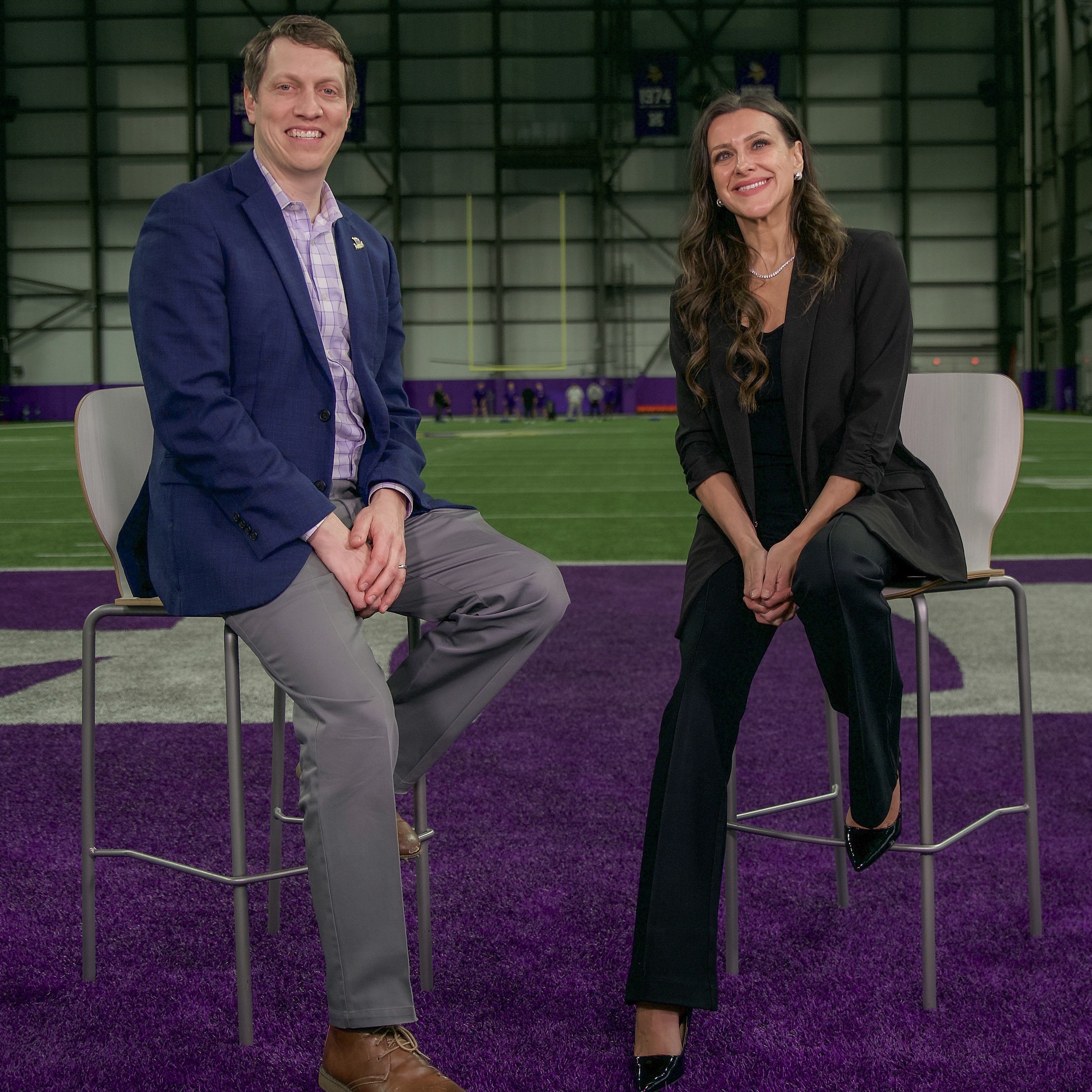
There is something profoundly humble about building something you hope the world eventually outgrows. It is the opposite of empire building. The goal isn’t to make yourself indispensable. The goal is to leave something better than you found it.
Near the end, I asked Brett the question I ask every guest: What does Rise to More mean to you?
He returned to Bob Jensen.
Brett doesn’t think “more” is somewhere outside of us, waiting to be acquired once we become successful enough, important enough or powerful enough. “We all have it,” he said. To him, rising to more means asking whether he can rise to what is already within himself and live up to it every day.
Maybe that is what stayed with me most after leaving TCO Performance Center.
We tend to think influence begins when somebody gives us a large platform. When we have the title. The money. The audience. The company. The famous name. The resources to start a foundation or write a very large check.
But most human beings who changed our lives probably had none of those things when they did it.
Bob Jensen was a middle-school teacher in rural Iowa.
And decades later, some of what he taught a boy in his classroom is moving through the Minnesota Vikings and into communities he may never have imagined reaching.
That is the part of impact we cannot measure.
Brett talked about “winning on the margins,” a phrase he borrowed from Vikings head coach Kevin O’Connell. In football, the small plays accumulate. Precision matters. What looks insignificant in isolation can determine an outcome when enough of those moments are stacked together.
A life works that way too.
Most of us will never have the Minnesota Vikings’ resources. But we will have a person in front of us today. We will have an opportunity to make someone feel seen. We will decide whether to give our time, open a door, make a call, offer help, volunteer, encourage a child, mentor someone younger or simply treat another human being with more dignity than the moment requires.
We may never know what becomes of it.
Bob Jensen probably couldn’t have known either.
And maybe that is the beautiful thing about doing good: we don’t always get to see where it goes.
Brett Taber is the Vice President of Social Impact for the Minnesota Vikings, where he leads the organization’s community engagement and philanthropic efforts. To learn more about the Vikings’ work in the community, including Vikings Table, youth initiatives, and the Vikings Foundation, visit the Minnesota Vikings Community page or follow the Vikings’ community channels on social media. Learn more and get involved at https://www.vikings.com/community/vikings-foundation/
____________________________________________________________________________
About Rise to More
Rise to More with Jasna Burza is a podcast about ambition, leadership, business, and what it means to build a meaningful life. Through candid conversations with founders, executives, athletes, public figures, and people making an impact, Jasna explores the decisions, lessons, challenges, and defining moments behind extraordinary lives.
New episodes on Apple Podcasts, Spotify, YouTube, and Substack. To learn more about Jasna or work with her privately, visit jasnaburza.com.


